
SEA KALE
Product Description:
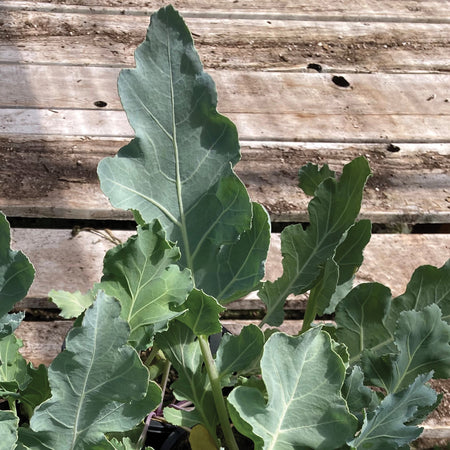
Sea Kale plants ship in May in 3 ½ inch pots. Order early for best availability. Detailed planting information and growing instructions are included with each order, and may be obtained on our website. Available only in the contiguous US.
-
Key Features:
-

-

-


-
Key Features:
-
-
-
Customer Reviews
When my three sea kale plants arrived, they were anemic and tiny. However, with good watering, deep alfalfa mulch, and worm castings, they perked up and took off. Their growth is stellar, quadrupling in size. They are attractive plants. I won't taste them until next year, when they will hopefully be more mature/larger. I will buy more next year as I want one on the north side of each of my fruit trees. Thank you for carrying these cool plants!
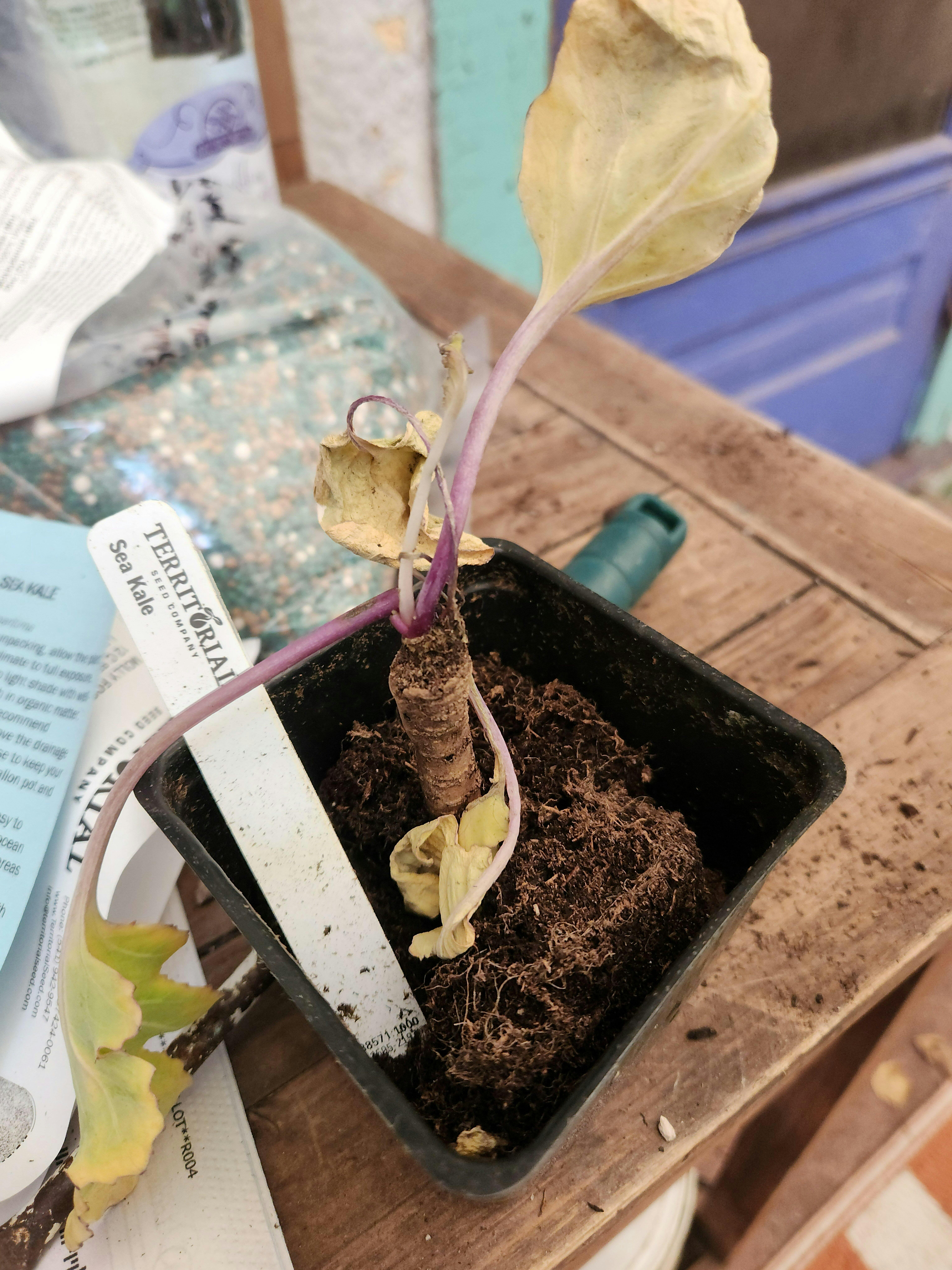
So sad. I waited a long time for this, and had prepared a spot for it. Unfortunately, it was too long in the mail. It arrived in a dreadful state. I have a good track record of bring things back from the dead, but I have little hope.
So sorry to hear that! At Territorial, our products are backed by our full guarantee. We want you, our customers, to be 100% satisfied with the seed, plants and supplies that you purchase from us. If anything you buy from Territorial proves to be unsatisfactory, we will either replace the item (if available) or refund the purchase price, whichever you prefer (for up to 1 year from purchase). You can also reach out to us for any troubleshooting, we'd be happy to help! Contact our customer service (Monday-Friday 8AM-5PM Pacific Time) at either 800-626-0866 or info@territorialseed.com
I’m trying to move to more perennials and this seemed like a no brainer. It looked a little sad the first summer but this spring it looks great and I am harvesting small leaves and flower buds. Looking forward to years of enjoyment.
It's a little early to review this but I might not be asked again... I was a little dubious when the plant arrived with just a couple leaves. Then we had the typical cool and wet snap so I was not sure it was going to live. But into summer, it is putting up some good looking leaves (I do have it included in my garden watering setup). I did not do anything special to it, other than let it rest in filtered sun for a week or so before planting. It seems not harmed by slugs or rabbits, so that's something! I am looking forward to harvesting a bit next year, and to it filling up some space in my flower bed where lavender used to be (note another review that said the plant would take too long to fill in - maybe, but I think once it gets established after 1-2 years, it will be good).
| Soil Temp for Germ | 55–75°F |
| Seed Depth | ¼" |
| Seed Spacing | 4–6" |
| Days to Emergence | 5–17 |
| Thin Plants to | 12–24" |
| Row Spacing | 18–36" |
| Fertilizer Needs | Medium |
| Minimum Germination | 75% |
| Seeds per Gram | ≈ 300 |
| Seed Life | 3 years |
Brassica oleracea, Acephala Group: Fast becoming known as the "Queen of Greens", kale is one of the healthiest vegetables on earth. Kale is a true super food rich in carontenoids and flavonids, which are two powerful antioxidants that protect our cells from free radicals and are reported to specifically fight against the formation of cancerous cells. One cup of kale has just 36 calories, zero grams of fat, a whopping 684% of RDA of K, 206% of A, and 134% of C vitamins.
Days to maturity are calculated from date of direct seeding; subtract 15 days if transplanting.
Culture
• Kale is a cool-season crop that performs best in spring and fall
• In wet climates, ensure adequate plant spacing to reduce pest and disease issues
Direct Sowing
• Cover seed with loose soil, vermiculite, or sifted compost and water evenly
• Sow June—July for a fall crop
Transplanting
• Start indoors 4-6 weeks before anticipated transplant date
• Work in 1/2 cup of TSC's Complete fertilizer around each plant
• Start May—July for transplanting June—August for a fall crop
Insects & Diseases
• Common insects: See Brassica Insect Information below
• Common diseases: Leaf spot, black rot, fungal diseases, mold, mildew, club root
• Disease prevention: Dispose of diseased material, proper crop rotation of 3-4 years, apply Neem for mildews
Harvest & Storage
• Harvest leaves from the bottom up at any size
• Cool weather and frost brings out best flavor
• Store at 36°F and 95% relative humidity
Brassica Insect Information
Aphids: Control aphids with ladybugs or a hard spray of water or Pyrethrin. Also, select varieties that mature later in the season when aphid populations decline.
Cabbage worms, loopers, and root maggots: The first sign of cabbage worms will be off-white butterflies fluttering near the plants. They lay their yellowish-colored eggs on the undersides of leaves, which hatch into caterpillars that can cause severe root and head damage. To control light infestations, spray plants with Bacillus thuringiensis (B.t.). For heavy infestations, bait cabbage worms by mixing wheat bran into a B.t. solution. Add 1 tablespoon of molasses. Broadcast the bran mixture around the base of plants. Reapply as necessary. Using Reemay or Summer Insect Barrier can also provide control.
Flea beetles: Flea beetles chew tiny pinholes in leaves. Early control is essential to minimize the damage. Spray infected plants with Pyrethrin. Using floating row covers such as Summer Insect Barrier can also provide control.
Symphylans: In some areas of the US, symphylans (also known as garden centipede) can severely impede the plant growth of many crops. Only 1/4 inch long, white, and very active, they eat the root hairs of developing plants. Using larger transplants helps reduce damage. Contact your local county extension agent if you suspect you have a problem.