

MEGATRON
Product Description:
-
Key Features:
-


-
Key Features:
-
Customer Reviews
Big plants and big peppers. Very nice.
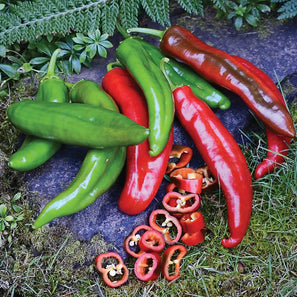
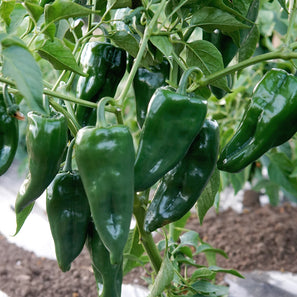
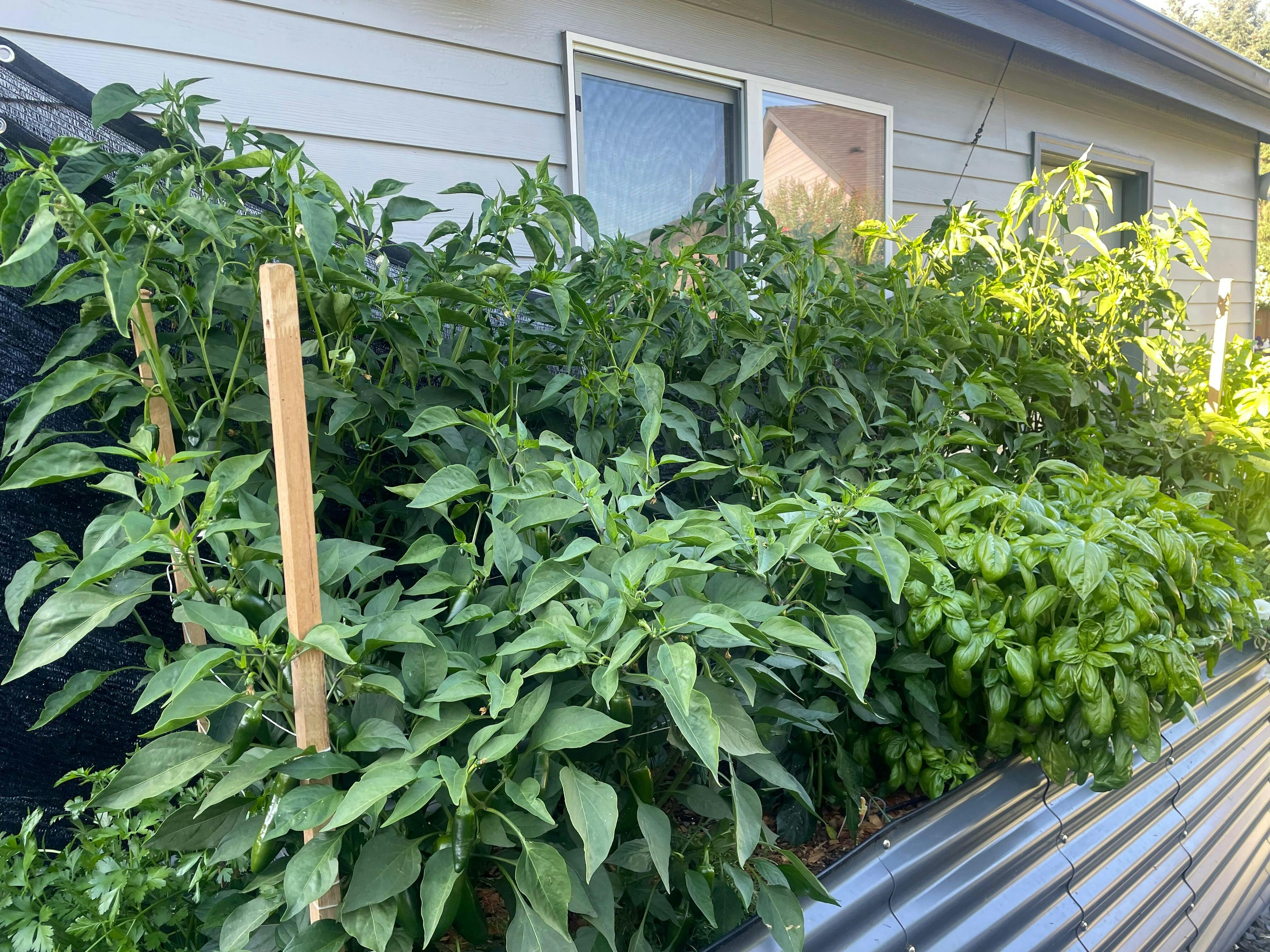
Willamette Valley OR- planted seeds in February. Stayed in greenhouse as healthy transplants and planted mid June. Been getting a ton of these for past month. Comparing them to standard Bell and serrano in photo. Perfect for stuffing. Ancho poblanos, seeds from Territorial as well, are the taller pepper plant in raised bed photo. Those always perform well too.
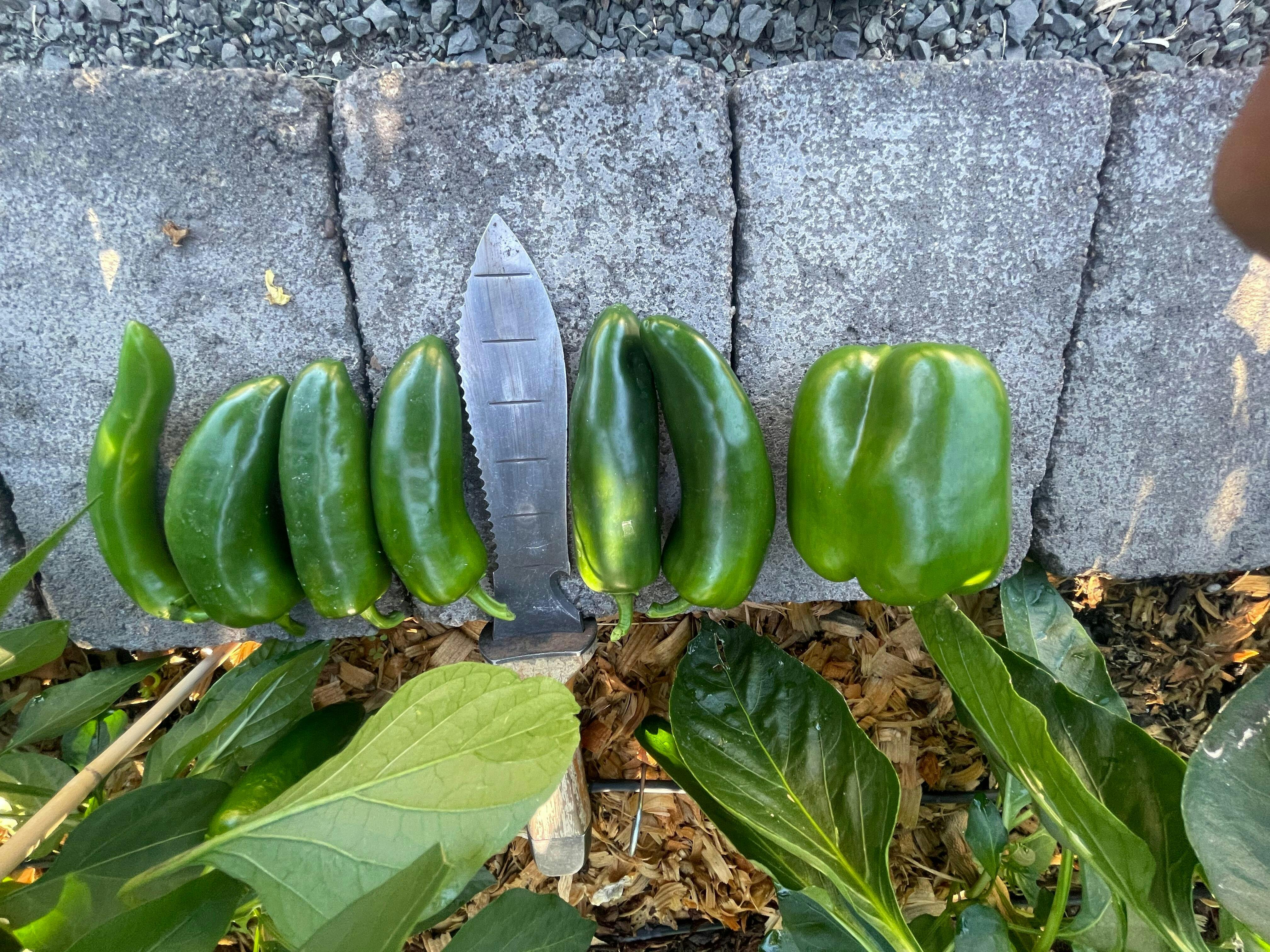
The Megatron jalapeno variety is amazing. We have four plants and the produced very early. Some of our oeooers were easily five inches and we are still getting new peppers on the plant. We canned a batch in slices and they are fabulous!
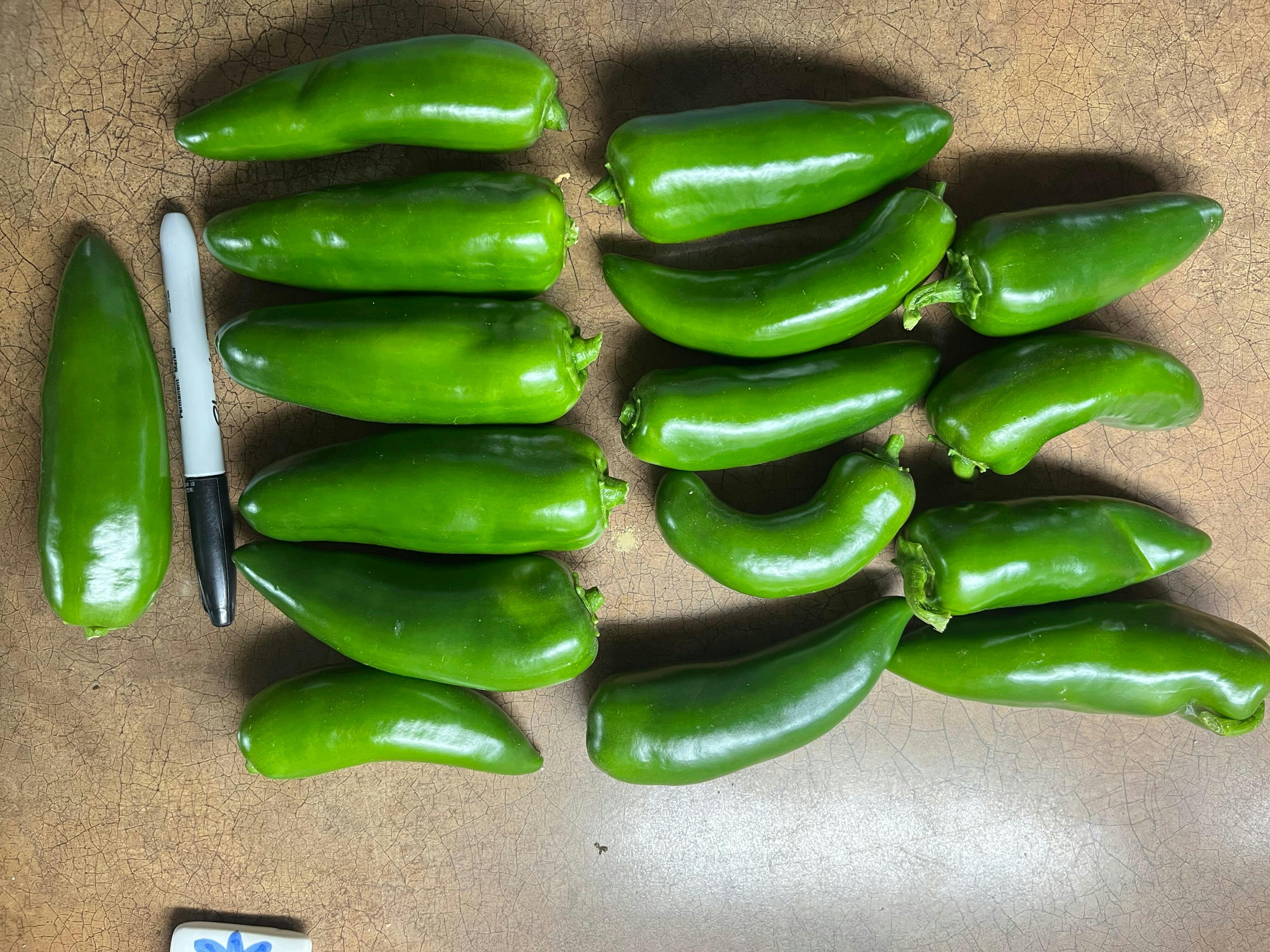
These peppers are so big and beautiful, I can hardly wait to stuff them for a special dinner! There are so many on the plant, I'm amazed!! I will buy them again!
| Soil Temp for Germ | 70–90°F |
| Seed Depth | ¼" |
| Days to Emergence | 8–25 |
| Soil Temp for Transp | 65°F |
| Plant Spacing | 12–18" |
| Row Spacing | 24–30" |
| Fertilizer Needs | High |
| Minimum Germination | 70% |
| Seeds per Gram | ≈ 140 |
| Seed Life | 2 years |
Capsicum annuum Our wide array of fabulous peppers, both sweet and hot, offers one of the richest sources of nutrients in the plant kingdom. Hot peppers contain capsaicin, which revs up your metabolism and reduces general inflammation in the body.
Days to maturity are calculated from date of transplanting and reflect edible green fruit.
Culture
• Peppers are warm-season annuals that grow best in composted, well-drained soils with a pH of 5.5-6.8
• Extra calcium and phosphorus are needed for highest yields
• Plants perform best when grown in raised beds and covered with plastic mulch
• Row cover young plants, remove after blossoms form
• Peppers grow slowly in cool soils; do not transplant before weather has stabilized
• Peppers set fruit best between 65-85°F
Direct Sowing
• Not recommended
Transplanting
• Start seeds in trays 8-12 weeks before anticipated transplant date
• Once seedlings have 2 sets of true leaves, up-pot to a 4 inch pot
• Use 1/2 cup TSC's Complete fertilizer and a shovelful of compost around each plant
• Fertilize with Age Old Bloom when plants begin to flower
Insects & Diseases
• Common insects: Flea beetles, aphids
• Insect control: Pyrethrin or row covers
• Common diseases: See chart below
• Disease prevention: 3-4 year crop rotation
Harvest & Storage
• Peppers are generally fully ripe and have the most flavor and vitamins when they turn red, yellow, purple, or orange
• Store at 45-55°F and 95% relative humidity
KEY TO PEPPER DISEASE RESISTANCE AND TOLERANCE
HR indicates high resistance.
IR indicates intermediate resistance.
BLS* | Bacterial Leaf Spot
Pc | Phythium Root Rot
PVY* | Potato Y potyvirus
RK | Root-Knot
TEV | Tobacco Etch Virus
TMV* | Tobacco Mosaic Virus
ToMV* | Tomato Mosaic Virus
TSWV* | Tomato Spotted Wilt Virus
* Numbers indicate specific disease race.