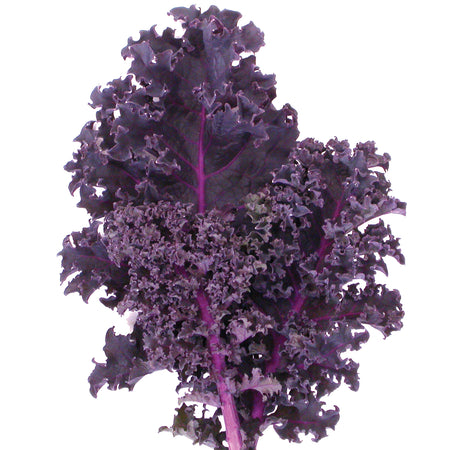
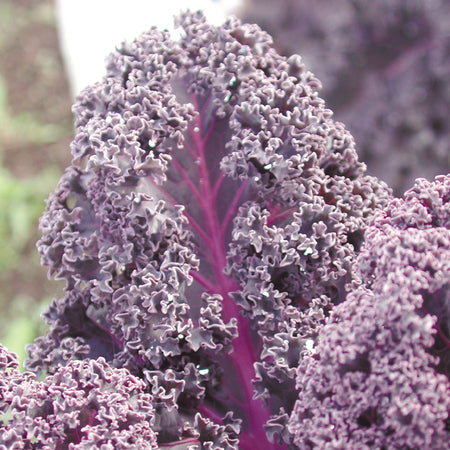


REDBOR
Product Description:
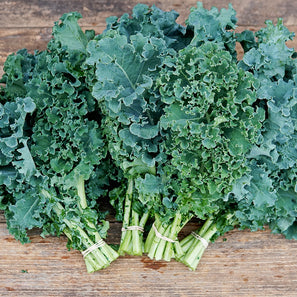
50 days. Wow, a completely magenta kale! This vigorous, cold-hardy, edible landscape plant is both beautiful and tasty. Mild and crisp, this finely curled kale adds a flash of color to salads. Redbor grows 18-24 inches tall.
-
Key Features:
-

-

-



-
Key Features:
-
-
-
| Soil Temp for Germ | 55–75°F |
| Seed Depth | ¼" |
| Seed Spacing | 4–6" |
| Days to Emergence | 5–17 |
| Thin Plants to | 12–24" |
| Row Spacing | 18–36" |
| Fertilizer Needs | Medium |
| Minimum Germination | 75% |
| Seeds per Gram | ≈ 300 |
| Seed Life | 3 years |
Brassica oleracea, Acephala Group: Fast becoming known as the "Queen of Greens", kale is one of the healthiest vegetables on earth. Kale is a true super food rich in carontenoids and flavonids, which are two powerful antioxidants that protect our cells from free radicals and are reported to specifically fight against the formation of cancerous cells. One cup of kale has just 36 calories, zero grams of fat, a whopping 684% of RDA of K, 206% of A, and 134% of C vitamins.
Days to maturity are calculated from date of direct seeding; subtract 15 days if transplanting.
Culture
• Kale is a cool-season crop that performs best in spring and fall
• In wet climates, ensure adequate plant spacing to reduce pest and disease issues
Direct Sowing
• Cover seed with loose soil, vermiculite, or sifted compost and water evenly
• Sow June—July for a fall crop
Transplanting
• Start indoors 4-6 weeks before anticipated transplant date
• Work in 1/2 cup of TSC's Complete fertilizer around each plant
• Start May—July for transplanting June—August for a fall crop
Insects & Diseases
• Common insects: See Brassica Insect Information below
• Common diseases: Leaf spot, black rot, fungal diseases, mold, mildew, club root
• Disease prevention: Dispose of diseased material, proper crop rotation of 3-4 years, apply Neem for mildews
Harvest & Storage
• Harvest leaves from the bottom up at any size
• Cool weather and frost brings out best flavor
• Store at 36°F and 95% relative humidity
Brassica Insect Information
Aphids: Control aphids with ladybugs or a hard spray of water or Pyrethrin. Also, select varieties that mature later in the season when aphid populations decline.
Cabbage worms, loopers, and root maggots: The first sign of cabbage worms will be off-white butterflies fluttering near the plants. They lay their yellowish-colored eggs on the undersides of leaves, which hatch into caterpillars that can cause severe root and head damage. To control light infestations, spray plants with Bacillus thuringiensis (B.t.). For heavy infestations, bait cabbage worms by mixing wheat bran into a B.t. solution. Add 1 tablespoon of molasses. Broadcast the bran mixture around the base of plants. Reapply as necessary. Using Reemay or Summer Insect Barrier can also provide control.
Flea beetles: Flea beetles chew tiny pinholes in leaves. Early control is essential to minimize the damage. Spray infected plants with Pyrethrin. Using floating row covers such as Summer Insect Barrier can also provide control.
Symphylans: In some areas of the US, symphylans (also known as garden centipede) can severely impede the plant growth of many crops. Only 1/4 inch long, white, and very active, they eat the root hairs of developing plants. Using larger transplants helps reduce damage. Contact your local county extension agent if you suspect you have a problem.