Family Owned Since 1979
Cultivating Gardeners

LIMKA

LIMKA

Product Description:

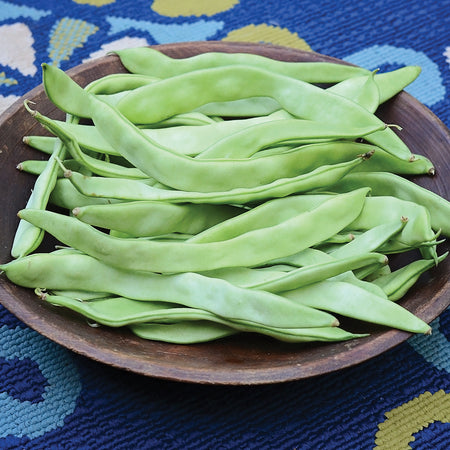
75-80 days. Romano-type beans have an edge on other beans when it comes to flavor, and Limka is a perfect example. This vigorous grower produces meaty, flat pods that are sweet and delicious. Maintaining their crisp texture even at enormous sizes, we enjoyed their snappy crunchiness anywhere from 6–9 inches long. The space-saving, climbing plants are robust growers and adaptable to a wide variety of growing conditions. White seeds; 55 per ounce.
  • Key Features:

SEED

ORGANIC SEED

$4.45

$4.45

  • Key Features:

Customer Reviews

Based on 7 reviews
71%
(5)
14%
(1)
0%
(0)
0%
(0)
14%
(1)
N
Nate C.
Fantastic Pole Bean

My wife grew up eating canned Italian beans, and when we found these began growing immediately. Very easy to grow in the Twin Cities, MN. I put up an arched trellis in the garden to make harvesting easier, and every year we eat 5-10 pounds of beans, freeze 5-10 pounds, and harvest hundreds of seeds for next year/give away. We typically enjoy them sautéed in a good butter with salt and pepper or in soups. As others have said even when large you can enjoy them without being too stringy as long as the plants have consistent water. I recommend for anyone who can grow vertically.

J
Jimmy L.
Good bean

I grew a 40 foot row of these and they didn't do so well early on. I am assuming because it was unusually hot and dry in NE Kansas. The plants didn't look very healthy. Once the rain became more consistent they were quite prolific. They have good flavor but were not good for storage past a couple of days, so you need to eat or preserve them shortly after harvest.

P
Penelope D.
EVERY YEAR!!!!

This is the BEAN! Amazing flavor, meaty and prolific, Limka is now basically the only bean we plant. We plant 2 long rows to eat, give as gifts, pickle and freeze since we’re far from an Asian market.

K
Kristin W.
Our favorite pole bean this year in western PA

My neighbor and I landed a community garden plot where we had more space and sun this year than we had in our gardens at home. We grew a bunch of varieties of pole beans, and Limka is our favorite. We try to keep up and pick them at a good size, but even when they get huge, they remain tender and non stringy. The flavor is excellent, with a subtle sweetness. They are also extremely productive, a winner in every way. We like our other beans, too, it's just that the Limka beans are the bean discovery of the season. We also are growing Rattlesnake, Fortex, Sunshine, Northeaster, and some others that I forget. Limka is our favorite, with Rattlesnake taking a close 2nd.

Soil Temp for Germ 60–85°F
Seed Depth 1"
Seed Spacing 2–4"
Days to Emergence 8–16
Thin Plants to 4"
Row Spacing 18–36"
Fertilizer Needs Low
Minimum Germination 80%
Seeds per Ounce Listed per variety
Seed Life 2–3 years

Rich and flavorful beans are fiber-packed veggies that promote digestive health and are excellent sources of antioxidants that scavenge free radicals in the body. They are also nitrogen-fixing legumes; beans gather nitrogen from the air and load it into the soil to feed future crops.

Days to maturity are calculated from date of direct seeding.

Culture
• Beans are shallow rooted and can require up to 1/4 inch of water a day during hot weather
• Optimum soil pH is 5.5-6.5, mildly acidic
• Apply 1 cup of TSC's Complete fertilizer per 10 row feet, and 1 inch of compost

Direct Sowing
• One ounce of seed plants 12-15 row feet, 1/2 pound for 100 row feet
• Grow Pole, Runner, and Yard Long beans on trellises

Insects & Diseases
• Common insects: Mexican bean beetles, bean weevils, cucumber beetles, spider mites
• Insect control: Pyrethrin
• Common diseases: See chart below
• Disease prevention: Avoid wetting the foliage, remove plants at the end of the year, 3-4 year crop rotation

Harvest & Storage
• Ready for harvest about 2 weeks after bloom
• Pick when pods are nearly full size and seeds are still small
• Harvest every 3-5 days to increase yields
• Store at 40-45°F and 95% relative humidity

KEY TO BEAN DISEASE RESISTANCE AND TOLERANCE
HR indicates high resistance.
IR indicates intermediate resistance.
A* | Anthracnose
BB | Bacterial Blight
BBS | Bacterial Brown Spot
BLS | Bacterial Leaf Spot
BMV | Bean Mosaic Virus
CTM | Curly Top Beet Mosaic Virus
DM | Downy Mildew
HB | Halo Blight
PM | Powdery Mildew
PMV | Pod Mottle Virus
R | Common Rust
* Numbers indicate specific disease race.
Thanks for signing up for our weekly newsletter!